Sourcing Standards

à la luck — Sourcing Standards

Every stone carries a named origin. No vague "ethically sourced."

"Ethically sourced" with no region named is not a standard — it is a marketing phrase. This page sets out exactly where à la luck stones come from, what we document on every piece, and the honest limits of what a one-person studio can and cannot certify.

à la luck studio bench — natural stone beads and ancient trade beads hand-knotted with plant-dyed cotton thread, each stone documented by region and mineralogical name before it ships
Every stone on the bench is logged by region and mineralogical name before it becomes a piece.
Quick Answer

à la luck sources stones primarily through curated estate suppliers and family contacts across the Himalayan corridor — Tibet, Nepal, and India — with select materials from Madagascar, Brazil, and the American Southwest. Every piece is documented with its stone family, true mineralogical name, and country of origin before it leaves the studio. We name a region or a dealer for each stone; we never publish a vague "ethically sourced" claim.

Our Sourcing Standards

à la luck makes edition-of-one talismans — each piece is made exactly once. That production model makes our sourcing different from a brand running repeat factory orders: we buy in small, specific lots, often estate or family-held material, and we know what each lot is before it becomes a piece. The following standards are not aspirational. They are the rules every à la luck piece already follows.

Standard 01

Named provenance, not vague claims

Every stone is tied to a named region or a named dealer. We treat the phrase "ethically sourced" with no origin attached as a red flag, not a green one — so we don't use it. If we can name where a stone came from, we name it. If we genuinely cannot trace a lot, we say so rather than dressing it in a comforting phrase.

Standard 02

Honest mineralogical naming

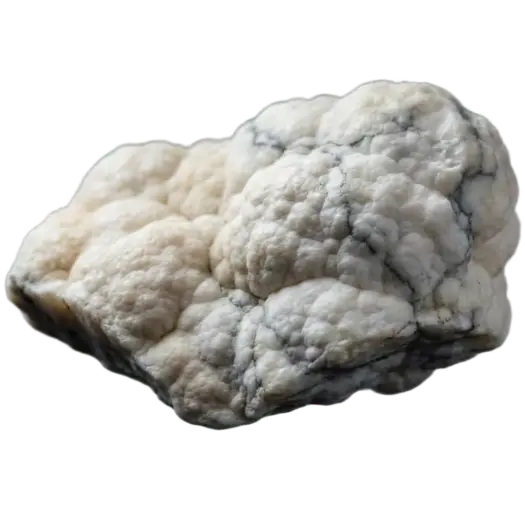
A stone is named by its true mineralogical identity, not a flattering trade name. Magnesite is called magnesite, not "white turquoise." Dyed howlite is disclosed as dyed howlite. Reconstituted material is labeled reconstituted. The name on the tag has to match the stone in the piece — sourcing honesty and naming honesty are the same commitment.

Standard 03

Documented before it ships

Before any piece leaves the studio it is documented with its stone family, mineralogical name, and country of origin. Edition-of-one means each piece is recorded individually — there is no anonymous bulk SKU standing in for hundreds of identical units. What you receive is the stone we logged, named the way we logged it.

Standard 04

Time-marked metal has a lineage too

When antique metal appears in a piece — Tibetan thokcha, aged copper, vintage hallmarked silver, antique brass with patina — it is treated as a time-marked material with its own provenance, not a factory component. Decorative alloy is labeled honestly as alloy. We never pass plated or nickel "Tibetan silver" off as precious metal.

Where Our Stones Come From

The bulk of à la luck material moves along old trade routes rather than modern wholesale catalogs. Much of it is estate or family-held stock — beads and stones that were collected decades ago and have changed hands within known circles. Below is the honest geography of the catalog.

Himalayan corridor
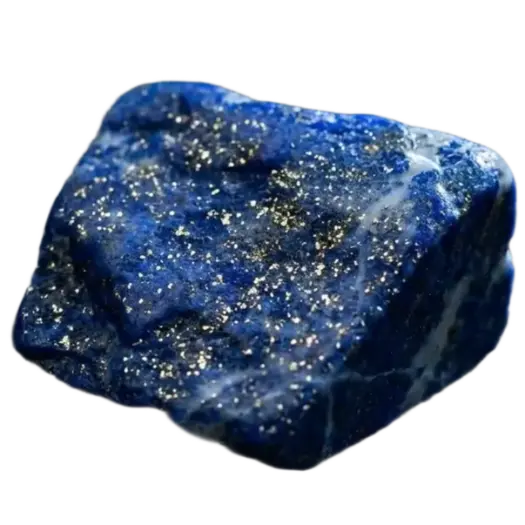
Tibet, Nepal, and India — our primary corridor. Source of Himalayan smoky quartz, Tibetan dzi and ancient trade beads, lapis lazuli moving through the region, and much of the estate-held material. Acquired through curated estate suppliers and long-standing family contacts.
Madagascar
Select feldspar-family material and quartz. A textbook origin for labradorite and certain moonstone.
Brazil
Select quartz-family stones and aventurine — one of the world's principal quartz sources.
American Southwest
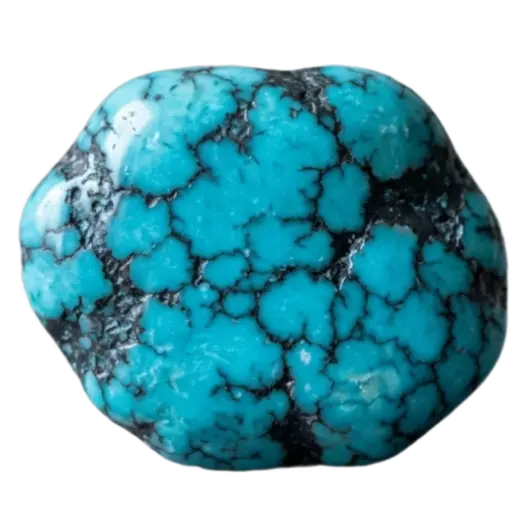
Natural turquoise, where used. When a piece calls for turquoise, we use natural turquoise and name it as such — not magnesite or howlite dyed to imitate it.

What We Document on Every Piece

Each à la luck talisman is logged before it ships with three things: the stone family, the true mineralogical name, and the country of origin. The thread is plant-dyed cotton, not synthetic — what touches your skin is held to the same honesty as what is strung on it. There are no metal clasps, no adhesives, and no machine stitching to obscure.

What we do not claim

Honesty cuts both ways. à la luck is a one-person studio, and we will not borrow credibility we have not earned. We are not RJC-certified, Fairmined, or audited by any third-party body — those certifications belong to operations with the scale and supply chains to support them, and claiming one we don't hold would be exactly the kind of dishonesty this page exists to refuse.

A solo maker cannot stand at every mine. What we can do is name our suppliers and regions, work through estate and family material whose history is known to us, refuse stones we cannot identify, and document every piece individually. That is a narrower promise than a certification logo — and a more honest one. For how this naming discipline plays out in the cases buyers get fooled most, see our Magnesite vs Howlite vs White Turquoise guide and Reconstituted vs Natural Turquoise guide.

Material Safety and California Proposition 65

Quick Answer

A few à la luck pieces carry a California Proposition 65 notice — chiefly those using natural turquoise (trace lead bound in its phosphate lattice) and those with antique brass or traditional metal-alloy accents. Most of the catalog — quartz, agate, feldspar, pearl, and plant-dyed cotton cord — triggers no notice at all. Proposition 65 is a disclosure law, not a safety verdict: it requires a warning at exposure levels far below federal safety limits.

California's Proposition 65 requires a notice on any product that may expose a buyer to one of its listed chemicals — most relevantly, trace lead — even when the amount sits well below federal safety thresholds. Rather than scatter the same warning across product pages and leave it there, we explain here exactly which materials carry it and why, so you can choose with full information.

The trace lead in these materials is geological or alloy-bound, not a coating or an additive. In natural turquoise it is held within the stone's crystalline structure and is not surface-bioavailable under normal wear. In antique brass and traditional alloys it is a property of older metalworking. We disclose it because honest labeling is the same commitment whether the subject is a stone's name or a stone's chemistry.

Natural turquoise
Carries a Prop 65 notice. Trace lead is bound within the phosphate lattice — a universal geological property of the stone, not surface contamination. Used only in the few pieces that call for genuine turquoise.
Antique brass & traditional alloys
Carries a precautionary notice. Historical brass and traditional "Tibetan-style" alloys can hold trace lead from older metalworking. These appear only as small accents, never the dominant material, and are not in sustained skin contact during normal wear.
Quartz, agate, feldspar, pearl & cord
No Prop 65 trigger. The large majority of the catalog — the quartz and agate families, moonstone, labradorite, sunstone, lapis, jade, freshwater pearl, and plant-dyed cotton thread — carries no listed-chemical notice.

If you are pregnant, nursing, or buying for a child and would rather avoid the flagged materials entirely, choose a piece built from the quartz, agate, feldspar, or pearl families — and feel free to ask us first. Each flagged piece also states its own Proposition 65 notice on its product page, and the full statutory wording lives on our Disclaimer page.

Labor and Ethics — A One-Person Studio

Quick Answer

Every à la luck piece is hand-knotted by one person: founder Yifeng Tao, working alone in her studio. There is no factory, no overseas labor line, and no subcontracted assembly — so there is also no third-party labor certification, because there is no labor chain to audit. The maker and the brand are the same person. That is the whole labor story, and it is a narrow, checkable truth rather than a logo.

Most "ethically made" claims exist to reassure you about a chain of workers you will never meet. à la luck does not have that chain. Each talisman is selected, knotted, and finished by Yifeng Tao herself — the same hands from the first bead to the final knot. When you ask who made your piece, the honest answer is a name, not a country.

This is why you will not find a fair-labor seal or a factory audit on this page. Those certifications are built for operations that employ people at scale; they answer a question a solo studio does not raise. Claiming one would be the same dishonesty as claiming a sourcing certification we don't hold — borrowing credibility built for a different kind of business.

What "ethically made" means here

It means one maker, paid for her own work, accountable for every piece under her own name. No outsourced labor whose conditions we would have to vouch for secondhand. No volume targets that turn a craft into a quota. The edition-of-one model is not only an aesthetic choice — it is also what keeps the labor question answerable in a single sentence.

As the studio grows, the one honest addition on the horizon is part-time fulfillment help — packing and shipping, never the making. If and when that day comes, it will be named here. The making stays with the maker.

Frequently Asked About Sourcing

How does à la luck source its stones?
Primarily through curated estate suppliers and long-standing family contacts across the Himalayan corridor — Tibet, Nepal, and India — with select material from Madagascar, Brazil, and the American Southwest. Material is bought in small, specific lots rather than repeat factory orders, and every piece is documented with stone family, mineralogical name, and country of origin before it ships.
Is à la luck RJC-certified or Fairmined?
No. We are a one-person studio and do not hold any third-party sourcing certification. We consider claiming a certification we don't have to be dishonest. Instead, our standard is named provenance — a region or dealer for every stone — plus individual documentation of each piece.
What does "named provenance" actually mean?
It means a vague "ethically sourced" claim is not enough for us. For every stone we can point to a named region or a named dealer. Where material is estate or family-held, its history is known to us through the people we acquire it from. If we genuinely cannot trace a lot, we say so rather than dressing it up.
Why is vague "ethically sourced" a red flag?
Because it is unfalsifiable. A phrase with no region, no dealer, and no documentation behind it can mean anything or nothing. By 2026 it has become the default reassurance language of the mass crystal market — which is exactly why we hold ourselves to naming the origin instead of repeating the phrase.
Are the stones genuine, or treated?
Genuine, and named by what they actually are. When a stone is dyed, reconstituted, or commonly mistaken for a pricier material, we disclose it — magnesite is magnesite, dyed howlite is dyed howlite, reconstituted is reconstituted. See our honest identification guides for how to tell the difference yourself.
Where are the pieces made?
Hand-knotted by founder Yifeng Tao at her solo studio. ALALUCK LLC is the U.S. business entity, registered in Wyoming; production happens at the studio, not in Wyoming. Sourcing covers where the stones originate; making covers how the piece is built — both are documented honestly.
Does à la luck jewelry carry a California Proposition 65 warning?
A few pieces do — mainly those using natural turquoise (trace lead bound in its phosphate lattice) and those with antique brass or traditional metal-alloy accents. The majority of the catalog, built from quartz, agate, feldspar, pearl, and plant-dyed cotton cord, carries no notice. Proposition 65 requires a warning at exposure levels well below federal safety limits, and each flagged piece states its notice on its own product page.
Who makes à la luck jewelry, and is any of it factory-made?
Every piece is hand-knotted by founder Yifeng Tao, working alone in her studio. There is no factory, no overseas labor line, and no subcontracted assembly — and therefore no third-party labor certification, because there is no labor chain to audit. The maker and the brand are one person.

Read More

I would rather name one dealer than print the word "ethical" a hundred times. A region you can check is worth more than a phrase you can't. That is the whole standard.

— Yifeng Tao, founder, à la luck